Ask A Recruiter: Protocol for Thank You Notes

Q: Are thank you notes obsolete? What’s the protocol for thanking someone after an interview?

Thank you notes are not obsolete. It’s as important as ever to thank someone after a job interview. In fact, for jobs where attention to detail and good follow-through skills are important, the thank you note is a chance to demonstrate your ability.

However, technology and how different people prefer to use it has muddied the waters a bit and has perhaps made the idea of a handwritten thank you note seem old-fashioned. People still write and receive handwritten thank you notes, but email thank you’s have become more and more accepted. It’s a matter of personal preference and sometimes timing, e.g. how quickly you want to follow up after the interview.

Here are some thank you protocols that I recommend following:

  • Consider the note’s purpose. The thank you note should follow a simple structure and articulate several messages concisely: it should thank the interviewer for their time, reiterate your interest in the job and (very briefly) summarize how your skills and experience are a good fit for the position. While this isn’t the time to “re-interview” for the job, writing and sending a thank you note is an opportunity to distinguish yourself as a candidate.
  • Consider writing a first draft and giving it to a friend or your recruiter to review. I often have candidates send me a draft of their thank you note before they send it to the interviewer. It’s helpful to have another set of eyes review the note for grammar, punctuation and possible mistakes.
  • Make sure you know to whom and where to send it. Everyone you interview with should be thanked. I recommend collecting business cards of the people you meet with so you’ll have the correct spelling of their name and the right address. In lieu of this, you can always call the office’s main number, explain why you’re calling and ask the person you speak with to provide you with that information.
  • Don’t ask any questions. This is single-purpose communication, the purpose being to thank the interviewer and show your interest in the position.
  • Don’t delay. Thank you notes should be sent within a day or two of the interview.


About the Recruiter
K-Coppins
Kristen Coppins has 9+ years of experience in the staffing and recruiting industry.  As a Director and member of the management team at Professional Staffing Group (PSG), she oversees the new hire training and development program. Kristen is also a member of ASA’s Continued Education Committee. 

Economists Predict Hiring to Pick Up in 2013

While hiring for full-time jobs is relatively slow right now, which many say is due to uncertainty in Washington, economists predict the pace of hiring among Boston employers will pick up steam later in 2013. In particular, certain industries will see more demand than others, including construction, professional technology services, IT, and hospitality industries.

In contrast, the temporary staffing market is experiencing record growth. An annual survey and forecast from Staffing Industry Analysts predicts that the use of temporary staffing will hit record numbers in 2013. This year, temporary hires across all industries are expected to reach 106 percent of their historical high and some sectors, such as locum tenens physicians and nurses and IT and engineering/design professionals, will far exceed the average.

Massachusetts Unemployment Rate Holds Steady at 6.6%

According to Massachusetts’ Executive Office of Labor and Workforce Development, the state’s unemployment rate held steady at 6.6 percent in November. It had increased during each of the previous four months. While the local economy lost 1,100 jobs last month, there are 46,600 more jobs in Massachusetts now than there were one year ago.

Earlier this month, the US Department of Labor reported that the nation’s unemployment rate for November was 7.7 percent, down from 7.9 percent in October. 

Ask A Recruiter: Tips for Video Interviews

Q: I just found out my interview will be over Skype. Do you have any suggestions to help me prepare?

A: In many ways, interviews conducted over Skype, or other video technology, are just like regular job interviews. My colleague provides some good advice for general interview preparation in this earlier blog post.

But, of course, using video technology introduces some new considerations, such as:

Interacting with video – If you’re not a TV or movie actor it may not feel natural to look into a camera for an entire interview and it can be very tempting to look at the interviewer’s image onscreen (or the small one of yourself to check your appearance). However, it’s important to remember to look at the camera – and not your screen – during the interview.

The camera and microphone are on – With a video interview the camera will likely be focused on your upper body and face and, therefore, so will the interviewer. He/she won’t have the context of a whole room to look at, as they would if you were meeting together in an office. Any non-verbal cues, expressions or movements will be exacerbated because of this. Also, any nearby noises – such as shuffling papers or nervous tapping – will also sound louder because the microphone is focused on you.

Your surroundings will also be captured on film – Just as you would prepare for a phone interview, I recommend finding a private, quiet spot for the video interview. Consider your background too: a plain background is best.

Dress for success – While some interview candidates might be tempted to take advantage of the camera’s limited range and wear casual pants for a video interview, I recommend dressing as you would for a regular interview. You’ll feel more pulled together and ready to deliver your “A-Game” if you’re dressed for the part.

Check the equipment before the interview – We all have experienced technical problems and know that they happen when we least appreciate them. To improve your chances of having a smooth interview, set up the camera and do a practice video conference call with a friend or family member. Check the volume, the lighting and other settings. I recommend using a cable or hard wire connection (not a wireless one if you can help it) to get the strongest Internet connection.

Make sure your image is professional – Sometimes the little things make a big difference. If you’re using an email address, screen name or Skype profile name that you created years ago, consider whether it will hurt your professional image, e.g. a profile name like “Sk8tR GRL” could give an employer the wrong impression. Creating professional accounts are free and easy to do.

About the Recruiter
Lauren_OBrien
Lauren O’Brien is a five year veteran of the staffing industry.  Lauren is the Group Manager of a team that services one of PSG’s largest and most valued clients.  Lauren and her team specialize in direct hire and temporary placement of financial services and administrative professionals. 

There’s more to recruiting than meets the eye

If you’ve worked with a recruiter – either as an employer looking to find the right talent or as a job seeker looking for the right opportunity – you may have wondered what it is, exactly, that the recruiter does. Perhaps you have even second-guessed their process.

We think this Recruiter.com article, Why Recruiting Looks Easy, does a nice job of summing up the recruiting process. We agree with the author that, while recruiting may look easy – “few professions look so simple. It’s really hard to pass along a piece of paper, right? You can almost hear hiring managers thinking to themselves, “Yeah, I’ll bet your fingers are really tired from dragging all those resumes from a folder into an email. Real hard work.” Few jobs seem so easy to duplicate.” – there’s certainly more to the recruiting process than meets the eye.

The article mentions the behind-scenes recruiting work like identifying, spotting, finding and assessing talent; understanding the job and culture; working a database and connections; possessing insight into the department’s or hiring manager’s psychology; and the persistent calling and online searching to bring people together.

PSG’s Frank Gentile  agrees with the author’s conclusion that “anyone or any recruiter can luck out and make a placement or two. But the background required for long-term recruiting success is much different. It involves the deep study of companies, products, markets, assessment, and professions coupled with a kind of brute force stamina to doggedly pursue the talents of other people.” Frank has worked in the recruiting field for more than 20 years. As someone who hires and trains recruiters, Frank says that the best recruiters share several traits, including the ability to maintain the stamina and tenacity to focus on long-term goals and a strong sense for evaluating intangibles such as culture fit and matching candidates’ career aspirations with employers’ business objectives.

Ask A Recruiter: Culture Fit

Q: What do people mean when they talk about culture fit? Why is it important?

A: Culture fit refers to the compatibility between employees and their workplace and it is a measurement of how well a worker will do in a certain environment. To understand the culture of a workplace and whether it fits the employee’s work style, you can look at the work environment, management style, collaboration among all staff, communication norms, and employee motivations, recognition and reward factors.

At PSG, we talk about culture fit all the time. We often meet with job seekers who are looking for a new job that is exactly the same as their last job, but in a different environment, because the culture fit was ‘off’ in their previous job. We also see people take a temporary job that may not have been their first choice and then, based on the culture at that organization, find that the job is a great fit and they end up electing to stay there. Temping and interning are great ways to try out an environment.

To understand if you are culturally a good fit with an organization, I recommend these tips:

  • Evaluate the culture fit just as much, if not more, as you would other criteria when deciding on a new job.
  • Decide which cultural factors are most important to you, and develop a list of questions to ask during the interview that will help you determine whether the workplace is right for you.
  • Ask for a tour. If the interview consists of being shown into an office and then walking straight out, ask for an impromptu tour that can give you a glimpse of how people interact.
  • Use your personal network and social media connections to link up with people you know who have inside knowledge of an organization to get their input on its culture.
  • Go with your gut.

About the Recruiter
Katy-LeVeque-photoKaty Leveque is a Senior Group Manager at PSG.  Katy learned the recruiting business from the ground up.  She joined PSG shortly after graduating college over five years ago and today Katy oversees the service teams that support some of PSG’s most valued clients.

PSG Sponsors Business Case Competition for Latino Students

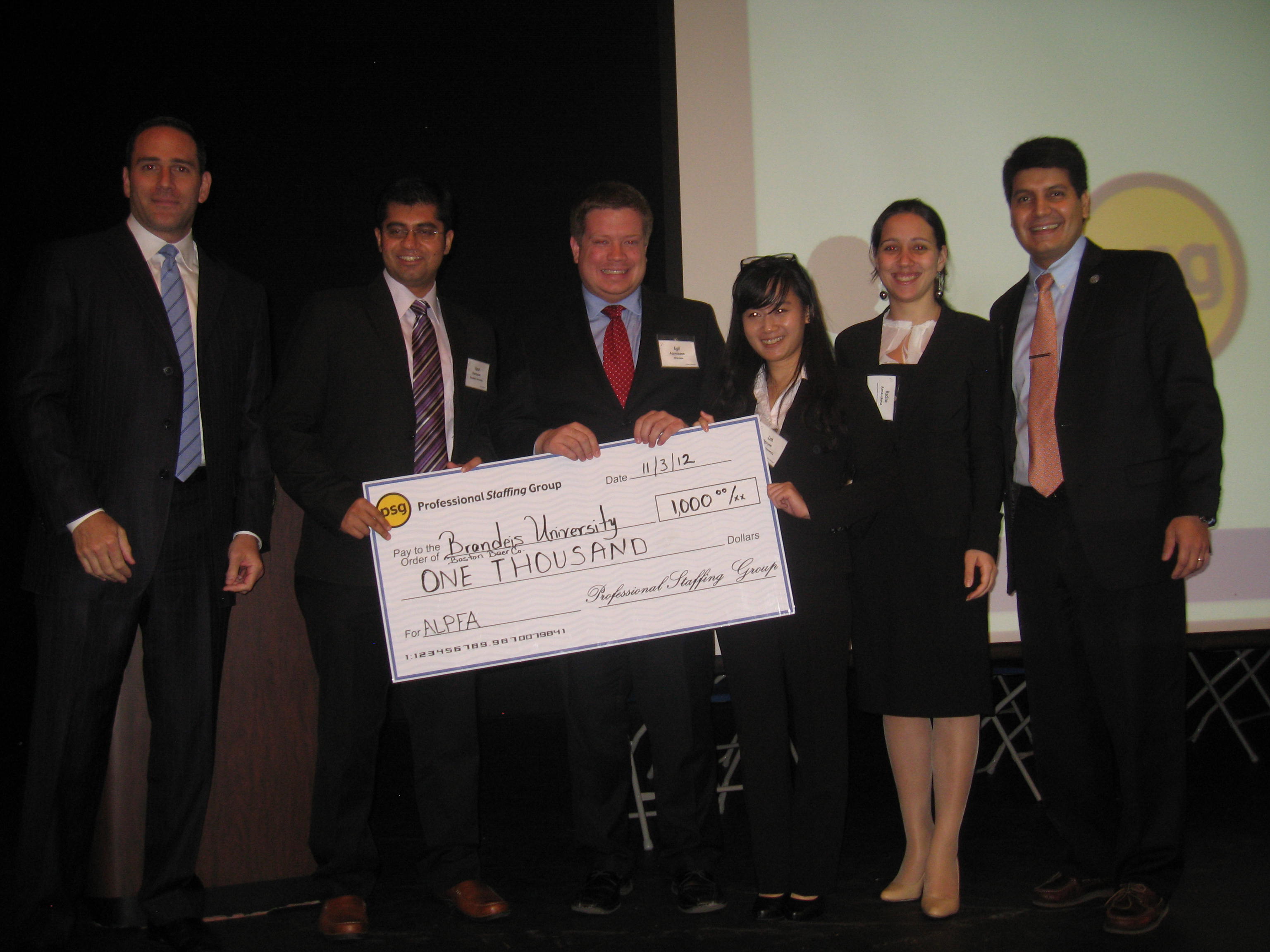
PSG recently participated in ALPFA’s Annual Student Summit at Brandeis University, which attracted more than 300 students. At the Summit, PSG sponsored two business case competitions among the students. PSG President Aaron Green presented the two winning teams, one from Hult International Business School and one from Brandeis University, with a $1,000 check from PSG.

ALPFA is the largest Latino professional association, uniting professionals and students in the fields of business, accounting, finance and other professions and connecting them to a community of resources to help them succeed and rise through corporate ranks. ALPFA is dedicated to enhancing opportunities for Latinos and building leadership and career skills.

Alpfa-Nov-2012-pic1 Alpfa-Nov-2012-pic2


Massachusetts Unemployment Rate Rises Slightly for Fourth Month in a Row

The unemployment rate in Massachusetts rose to 6.6 percent, up slightly from 6.5 percent in the previous month, according to the Massachusetts Executive Office of Labor and Workforce Development. Although 7,900 jobs were added across the state in October, this is the fourth consecutive month that the overall unemployment rate has risen. Massachusetts’ unemployment rate remains below the national average of 7.9 percent.


Ask A Recruiter: Is Getting an MBA Worth It?

Q:  I’m thinking about getting my MBA and am trying to decide if it’s worth it. What are your thoughts?

A:  Determining whether an advanced degree will help your career or not depends on several things:

First, think about why you are considering going back to school. Do you lack certain skills that would help you advance in your profession? Would you like to switch career paths? Do you see an advanced degree leading to a bump in salary? These are all reasons for pursuing a new degree. Knowing what is driving your desire will help you determine if getting the degree will be “worth it.” For example, if you feel that an advanced degree will elevate your pay grade it may be helpful to determine if this is true by talking to your HR department and then comparing the cost of getting the degree with the anticipated pay raise.

It’s also important to consider the industry you work in and your role within that industry. Advanced degrees can be essential to some jobs, such as highly technical roles like engineers, or to management positions that require well-rounded critical thinking. Other jobs – such as sales positions – rely more heavily on experience.

If you feel that an MBA or other advanced degree will help your chances of moving into a management position, I suggest running this scenario by your boss. Doing so will not only let you know if your boss views you as management material, but will also give you a sense of whether your employer values advanced degrees and whether they may pay for all or some of your education.

Of course it would be tough to overlook the current economic climate and that’s certainly another factor to consider. Recently, much attention has been paid to the high costs of college education and it’s important to consider whether you can handle the expense and, of course, the time commitment that going back to school would require.

About the Recruiter
Laurie-F-photoLaurie Fiumara has 10+ years of experience in the staffing and recruiting industry. As a director and member of the management team at Professional Staffing Group (PSG), she oversees PSG’s major client relationships.